2026-10-12 · Friday Report Team
Quick Summary
● Look beyond the project boundary. A small extension in one project can disrupt shared resources and downstream schedules across the portfolio. Evaluating changes in isolation hides these cascading effects.
● Track resource collisions. When a specialist stays on a delayed project, their next assignment suffers. This creates a domino effect that delays multiple connected initiatives.
● Monitor budget and contingency. Extended timelines consume funding that might be needed elsewhere. Portfolio impact analysis ensures you understand the true financial cost of a change.
● Beware of hidden schedule compression. Teams often try to absorb scope changes without moving the final deadline. This leads to compressed testing phases and increased risk for the entire program.
● Adopt portfolio change management. Decision-makers need visibility into all active projects before approving requests. Contextual data prevents small adjustments from accumulating into major disruptions.
Introduction
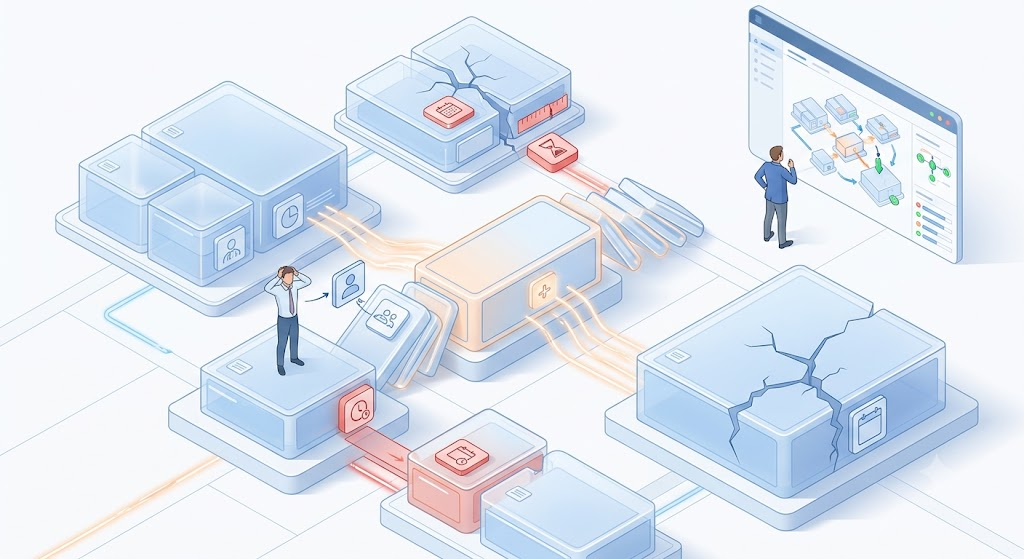
A two-week extension does not stay inside one project. Imagine a scenario where a critical initiative needs two additional weeks to complete a new requirement. Viewed alone, the change looks entirely manageable and easy to accommodate.
But the specialist assigned to the project was supposed to move onto another initiative next Monday. The extension now affects two schedules, and that second initiative has a strict launch dependency. Suddenly, a small change has become a portfolio issue.
The size of a change request does not necessarily tell you the size of its impact. Effective project change control requires understanding how adjustments to one timeline ripple through shared resources, budgets, and connected initiatives.
project change management | change tracking / portfolio management / risk management |
project scope changes | scope management / project deliverables / scope creep |
portfolio impact analysis | cross-project impact / portfolio visibility / resource allocation |
change request impact analysis | change evaluation / approval workflows / impact assessment |
scope change impact | schedule compression / budget variance / timeline effects |
project change control | change governance / approval process / change logs |
portfolio change management | cumulative change / portfolio health / strategic alignment |
project change requests | change submission / stakeholder approval / request routing |
Key Factors Overview
Factor | Description |
Resources | Personnel retained longer than expected create shortages for subsequent assignments. |
Schedules | Delayed milestones alter downstream timing and disrupt dependent project phases. |
Budgets | Extended work consumes additional funding or depletes shared portfolio contingency. |
Connected Initiatives | Other projects stall while waiting for delayed outputs, decisions, or systems. |
Before Checklist
● Identify shared resources. Review the resource pool to see where team members are scheduled next. This prevents accidental double-booking when timelines extend.
● Map downstream dependencies. Check if other active projects rely on the deliverables being altered. Understanding these connections highlights potential bottlenecks early.
● Review portfolio contingency. Assess whether the proposed change will consume budget reserved for other risks. This ensures financial stability across the broader program.
● Evaluate concurrent requests. Look at what other project change requests are currently under review. Multiple small changes can compound into a significant resource drain.
After Checklist
● Update resource allocations. Adjust the schedules of any specialists affected by the approved change. Clear communication helps subsequent project managers adapt their plans.
● Adjust dependent milestones. Shift the timelines of any connected initiatives that rely on the delayed output. Keeping schedules aligned prevents cascading failures.
● Document the portfolio impact. Record how the change affected budgets and timelines outside the original project. This historical data improves future change request impact analysis.
● Monitor for schedule compression. Watch for teams attempting to rush later phases to make up for lost time. Proactive monitoring protects the quality of the final deliverables.
Table of Contents
Why Change Requests Are Usually Evaluated Locally
When a project manager receives a change request, their immediate focus is naturally on their own deliverables. They ask whether their specific project can absorb the extra work and if their allocated budget allows it. They also consider whether the project sponsor will approve the modification and if the final milestone can move.
These questions are critical for maintaining order within the project boundary. However, evaluating project scope changes solely through a local lens ignores the broader ecosystem. A project does not operate in a vacuum, and its resources are rarely exclusive.
Portfolio environments introduce another layer of complexity that local evaluations miss. When decision-makers only look at the immediate project, they fail to see how a minor adjustment might destabilize other active initiatives.
Four Places Project Changes Can Travel
Project changes rarely stay confined to their origin point. The first propagation path is through resources, where a person stays on one project longer than expected. This delay prevents them from starting their next assignment, creating a ripple effect across the organization.
Schedules represent the second path, as a delayed milestone inevitably changes downstream timing. Budget is the third area of impact, because extended work consumes additional funding or shared contingency reserves. As noted in [Scope Change in Project Management | Process, Tips & Example](https://study.com/academy/lesson/scope-change-management-definition-process-example.html), gathering relevant data about the change process is vital to understanding these financial shifts.
Finally, changes travel through connected initiatives. Another project may be waiting for the output, team, decision, or system involved in the modified project. When the approved change alters the delivery of that output, the connected initiative is forced to pause.
Scope Changes Can Create Consequences Even When Deadlines Do Not Move
Teams often attempt to preserve the original deadline when absorbing project scope changes. They might try adding resources, reducing contingency, or compressing later activities to fit the new work into the existing timeframe. Sometimes, they resort to moving other planned work to future phases.
While the project's headline end date stays unchanged, the internal disruption is severe. Schedule compression increases the risk of errors, particularly during testing and quality assurance phases. Adding resources late in the process can also disrupt other projects that suddenly lose personnel.
The portfolio impact can therefore occur even when the project appears to be on track. Hidden adjustments create stress on shared systems and personnel, proving that scope change impact extends far beyond the final milestone date.
The Problem With Assessing a Change Using Only Project-Level Information
A project manager may perfectly understand their own schedule but lack visibility into the wider organization. They do not necessarily know where shared resources are expected next or which other milestones rely on their project. This limited perspective makes accurate change request impact analysis nearly impossible.
Furthermore, project managers rarely know whether portfolio budgets are already constrained by other initiatives. They are also blind to what other project change requests are occurring simultaneously across different departments. This is primarily an information-visibility problem rather than a failure of project management skill.
Without access to portfolio-level data, leaders are forced to make decisions in the dark. As highlighted in [Chapter 22. Change control - Government Project Delivery](https://projectdelivery.gov.uk/teal-book/home/part-e-planning-and-control/chapter-22-change-control), decisions impacting other portfolios require accountability for balancing competing needs.
What a Better Change-Impact Review Should Consider
Before approving a modification, relevant stakeholders should understand exactly what changes inside the specific project. They must also ask what resource commitments move and what downstream dates are affected by the adjustment. Understanding these factors is the foundation of effective project change control.
Reviewers should also question whether the change consumes contingency needed elsewhere and if any other projects are relying on this output. Finally, they must determine if this change alters broader portfolio priorities. These questions ensure that decisions are made with full awareness of the consequences.
This approach should not become a rigid mandatory checklist that slows down every minor decision. Instead, it should serve as a guiding framework to ensure decision-makers pause and consider the wider ecosystem before granting approval.
Small Changes Can Accumulate
One two-week extension may be entirely manageable for an organization to absorb. However, the cumulative-change problem arises when multiple projects each make seemingly small adjustments simultaneously. As discussed in [Introduction to Change Portfolio Management](https://www.prosci.com/blog/introduction-change-portfolio-management), failing to view the collective impact leads to change saturation.
Multiple projects making small changes can gradually create severe resource collisions and widespread schedule compression. This accumulation also generates intense budget pressure and conflicting milestones across the portfolio. Because no single change appears severe enough to trigger concern, the overall degradation of portfolio health goes unnoticed.
Organizations must recognize that project change management is not just about individual approvals. It requires monitoring the aggregate effect of all modifications to prevent systemic overload.
Why Portfolio Context Improves Change Decisions
When project schedules, resources, risks, changes, and dependencies sit in related views, decision-makers gain a massive advantage. They can clearly understand where a proposed change may travel before they officially approve it. This visibility transforms portfolio change management from a reactive scramble into a proactive strategy.
Having the right context allows leaders to weigh the true cost of a change against its benefits. If a minor scope addition will derail a major strategic launch elsewhere, the decision becomes much clearer. Contextual data empowers organizations to protect their most critical initiatives.
This is where FridayReport provides significant value by connecting portfolio visibility directly to the decision-making process. By surfacing relevant cross-project data, it ensures that leaders have the insights needed to navigate complex change requests confidently.
Frequently Asked Questions
SECTION 1: Understanding Change Propagation
FAQ 1: Why do project scope changes often cause unexpected portfolio disruptions?
Project scope changes cause disruptions because they alter resource availability and downstream dependencies that other projects rely on.
When a project expands its scope, it typically requires more time or personnel to complete the new work. This prevents shared resources from moving to their next scheduled assignments, creating a domino effect of delays. Because project managers often lack visibility into these external commitments, the resulting disruptions come as a surprise.
Real Results: A software team added a minor feature to their release, delaying their lead developer by one week and subsequently stalling a major infrastructure upgrade that required her expertise.
Takeaway: Evaluating scope changes requires looking beyond the immediate project to understand the full organizational impact.
FAQ 2: How does change request impact analysis differ from standard project tracking?
Change request impact analysis evaluates the future consequences of a proposed modification, whereas standard tracking monitors current progress against a baseline.
Standard tracking tells you if a project is currently on time and within budget. Impact analysis, however, models how a specific change will alter the trajectory of the project and its connected initiatives. It requires assessing potential shifts in resources, budgets, and dependent milestones before any work is actually authorized.
Real Results: By analyzing a proposed scope change before approval, a PMO realized the extra work would consume the entire contingency budget for the quarter, prompting them to reject the request.
Takeaway: Proactive impact analysis prevents organizations from blindly accepting changes that jeopardize portfolio stability.
FAQ 3: What happens when teams compress schedules to absorb a scope change impact?
Compressing schedules to absorb scope changes increases project risk by forcing teams to rush critical phases like testing and quality assurance.
When teams try to add work without moving the final deadline, they often overlap tasks that should be sequential. This fast-tracking leads to burnout, higher error rates, and technical debt that must be addressed later. While the project might technically finish on time, the quality of the deliverables usually suffers significantly.
Real Results: A marketing team compressed their review cycle to accommodate a late scope change, resulting in a campaign launch that contained several critical branding errors.
Takeaway: Preserving a deadline at the cost of schedule compression often creates more problems than it solves.
SECTION 2: Improving Portfolio Visibility
FAQ 4: Can portfolio change management prevent resource collisions?
Yes, portfolio change management prevents resource collisions by providing visibility into where personnel are allocated across all active initiatives.
When decision-makers can see the entire resource pool, they can identify scheduling conflicts before they occur. If a proposed change requires a specialist to stay on a project longer, leaders can immediately see which future projects will be affected. This allows them to adjust timelines or reallocate staff proactively.
Real Results: An operations leader used portfolio visibility to see that extending a pilot program would double-book their training staff, allowing them to stagger the subsequent rollouts.
Takeaway: Centralized visibility is essential for managing shared resources effectively during periods of change.
FAQ 5: When should a project change control board review cross-project impacts?
A change control board should review cross-project impacts whenever a proposed modification affects shared resources, alters dependent milestones, or consumes shared contingency.
Not every minor change requires a full board review, but any adjustment that breaches the project boundary must be escalated. Establishing clear thresholds for escalation ensures that portfolio-level leaders only review changes that carry systemic risk. This keeps the governance process efficient while protecting the broader organization.
Real Results: A governance board intercepted a seemingly small schedule change that would have inadvertently delayed a regulatory compliance filing tied to a separate project.
Takeaway: Clear escalation thresholds ensure that cross-project impacts are reviewed by leaders with the authority to balance competing priorities.
FAQ 6: How does cumulative project change management affect overall budget contingency?
Cumulative project change management protects overall budget contingency by tracking the aggregate financial impact of multiple small modifications.
Individual projects often request small amounts of additional funding that seem insignificant on their own. However, without cumulative tracking, these minor requests can quickly drain the portfolio's shared contingency reserves. Monitoring changes in aggregate ensures that leaders understand the true burn rate of their emergency funds.
Real Results: By tracking cumulative changes, a PMO identified that five separate projects were slowly draining the annual contingency fund, prompting a freeze on non-essential scope additions.
Takeaway: Monitoring the aggregate impact of small changes is vital for maintaining financial health across the portfolio.
Conclusion
Effective change control is not only about recording that something changed in a log. It is about understanding exactly what else may move with it across the entire organization. A minor adjustment in one area can easily become a major disruption in another if left unmonitored.
We encourage readers to consider whether their current project change process gives decision-makers enough portfolio context before changes are approved. If your teams are struggling with unexpected resource collisions and cascading delays, it may be time to upgrade your visibility. FridayReport's connected portfolio visibility offers a practical way to surface these critical insights and keep your initiatives aligned.