2026-05-14 · Friday Report Team
There’s a quiet, familiar pressure that lives within many project managers. It sounds like this: “I should have it all figured out. If I admit I’m lost, I might be replaced.”
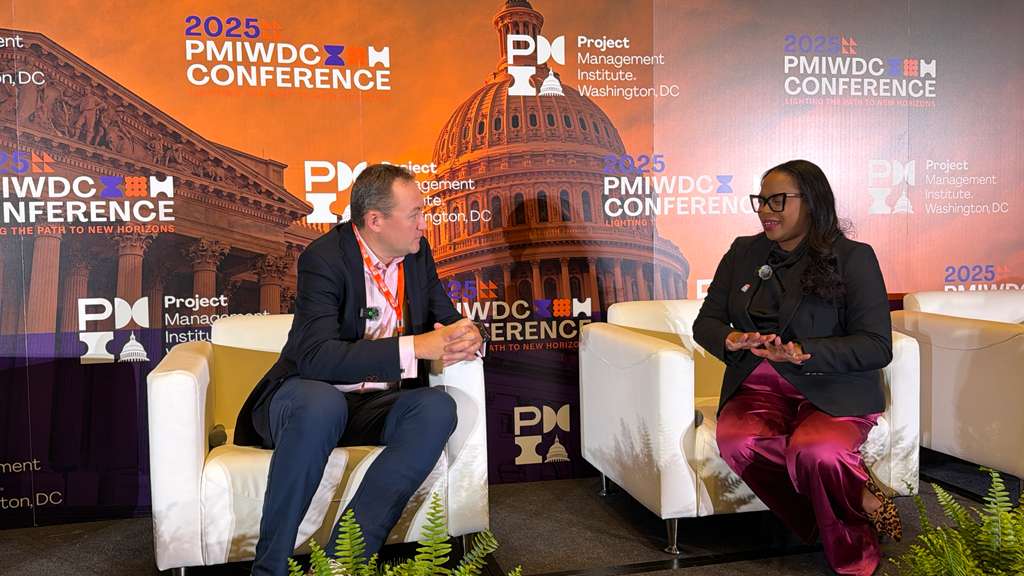
In my conversation with project leadership coach Ben Chan, that pressure showed up again and again in real situations he sees with his clients. Project managers are trying to deliver in complex, messy environments while feeling like they have to pretend they’re always in control. What emerged from our discussion was a story about courage, mindset, and what it will take to lead in the age of AI.
When Project Managers Feel Alone On An Island
Ben describes his work as being “an executive coach for project managers,” helping them become more confident, strategic, and resilient. His focus is on their leadership: how they communicate, make decisions, handle uncertainty, and show up with their teams.
He sees many project managers who feel isolated. They carry responsibility for outcomes, but don’t feel they can safely say, “I don’t know” or “I’m in trouble.” In some organizations, admitting that you’re stuck feels like you’re inviting someone to question your value.
The irony is that speaking up early is often the most responsible thing a project leader can do. It creates room to adjust scope, get support, or rethink the approach before the situation becomes a crisis. But in cultures that are driven by perfectionism and fear of blame, people learn to stay quiet instead.
When things do go wrong, some organizations reach for a quick replacement: “Let’s get a new project manager.” On the surface, this looks decisive. In reality, it can be very expensive. Teams lose institutional knowledge, relationships get disrupted, momentum drops, and everyone receives a clear message: don’t show vulnerability.
Ben believes there is a better option. Instead of discarding project managers when they struggle, organizations can invest in them through coaching, support, and targeted skill building. That way, a difficult project becomes an opportunity to grow a stronger leader, not just a problem to hide.
Mindset As A Leadership Lever
When I asked Ben where he starts in his coaching, he pointed to mindset. For him, mindset is the set of beliefs that shape how a project manager reacts under pressure.
Some of the beliefs he encounters sound like this:
“If I ask for help, people will think I’m not capable.”
“If I don’t have every answer, I’m failing at my job.”
“If I show uncertainty, I’ll lose credibility.”
He works with project managers to replace those beliefs with more useful ones, such as:
“Asking for help is part of leading responsibly.”
“My job is to learn and adapt, not to be perfect.”
“I can involve others in solving problems without losing authority.”
When that shift happens, behavior changes. Project managers become more open, more curious, and more willing to partner with their teams and stakeholders. They stop treating leadership as a performance and start treating it as a shared effort.
Ben also emphasizes that leadership isn’t meant to sit with one person at the top of a project. He encourages project managers to help others grow their own judgment and ownership. That means sharing context, inviting input, and making it normal for everyone on the team to ask questions and raise concerns. Over time, the project becomes less dependent on a single “hero PM” and more supported by a team that thinks and acts like owners.
Technology Is A Tool, Not The Center
In our conversation, we compared notes on the tools organizations use to manage projects. Ben moves between clients that rely on Jira, Azure DevOps, ClickUp, and, very often, simple Excel spreadsheets. The variety is wide, but the core challenge stays the same.
What matters to him is not whether a team is using the latest platform. What matters is whether the project manager can learn whatever tool is in front of them, use it effectively, and help the team get real value from it. The specific brand is secondary.
He frames the challenge this way:
Learn the basics quickly so you’re not blocked.
Then figure out how to use the tool in a way that genuinely improves communication, clarity, and decision-making.
This is where support networks become important. When project managers have a community they can turn to—whether internal or external—they don’t have to figure everything out alone. They can pick up tips, learn shortcuts, and adopt practices that have already worked for others.
We also talked about a common pattern: expecting technology to fix deeper problems. A new system is rolled out with high hopes. People assume that once it’s in place, the organization will naturally become more efficient and more disciplined. Months later, the same frustrations reappear: unclear priorities, inconsistent communication, and gaps in accountability.
The issue usually isn’t the tool. The issue is the way people work together. Tools can support healthy processes and relationships, but they can’t replace them. When leadership and culture are weak, even the best software can only do so much.
AI And The Time It Gives Back
AI is changing the way knowledge work happens, and project management is no exception. I asked Ben what role he sees AI playing in this space.
He pointed to familiar project activities: preparing reports, summarizing meetings, drafting communications, organizing schedules, and scanning information. AI can take on a large portion of that effort, saving hours that would otherwise be spent on manual, repetitive tasks.
That time saving is important, but it raises a key question: what will project managers do with the hours they get back?
One option is to fill the space with more of the same—more reporting, more meetings, more tasks. In that scenario, AI increases volume but not depth.
Ben argues for a different use of that time:
Spend more time in real conversations with stakeholders, understanding their concerns and expectations.
Step back to think strategically about risks, dependencies, and long-term impact.
Invest in the team’s cohesion, clarity, and sense of purpose.
In his keynote, he highlights how AI will handle many of the technical mechanics of project management more quickly and accurately than before. As that happens, the project leader's distinct contribution shifts even more toward the human side: guiding, aligning, and making judgment calls in complex situations.
We joked briefly about whether AI could replace leadership altogether. The reality is that tools can make suggestions and provide data, but they don’t assume responsibility for outcomes or build trust with people. Those are still human roles.
Choosing Human Leadership In A Digital World
Our conversation ended with a small, human gesture—a shared laugh and a high five. It was a simple moment, but it captured something essential. Even as technology advances, people still respond to presence, attention, and connection.
Here is what I learned from this conversation:
Project managers often carry heavy expectations while feeling they can’t show vulnerability.
Organizations pay a high price when they respond to struggle by replacing people rather than supporting them.
Tools and AI can remove friction and save time, but they don’t repair relationships or define culture.
At FridayReport.ai, we’re building technology to make project reporting and insight faster and more reliable. But the goal is not to push humans aside. The goal is to give project leaders the space to focus on what only they can do. Lead with honesty, clarity, and care.